

What are the Dental Implant Steps – What to Expect During Your Implant Procedure?
Dental implant surgery is a multistage process that involves the replacement of tooth roots with metal, screw-like posts, and the substitution of damaged or missing teeth with artificial ones that look and function much like real teeth. The course of treatment can span several months, primarily due to the healing time required between operations. We will talk about the key steps involved in a dental implant procedure and what patients can expect at each stage.
Initial Consultation and Examination
The first step in the dental implant process is an initial consultation and examination. During this appointment, the dentist conducts a comprehensive dental examination. This may involve dental X-rays, 3D images, and creating models of the teeth and jaw. The dentist will also review the patient’s medical history, discussing any chronic conditions like diabetes or heart disease that might impact the surgery or recovery. Based on this assessment, the dentist will then discuss treatment options and formulate a treatment plan tailored to the patient’s needs.
Tooth Extraction and Bone Grafting
If the tooth that requires replacement is still present, the next step is to extract it. After extraction, and depending on the condition of the jawbone, bone grafting might be necessary. Bone grafting is a process that involves adding bone or a bonelike material to the jawbone, strengthening it to support the dental implant. This procedure can take several months for the graft to create enough new bone to secure the dental implant.
Placement of the Dental Implant
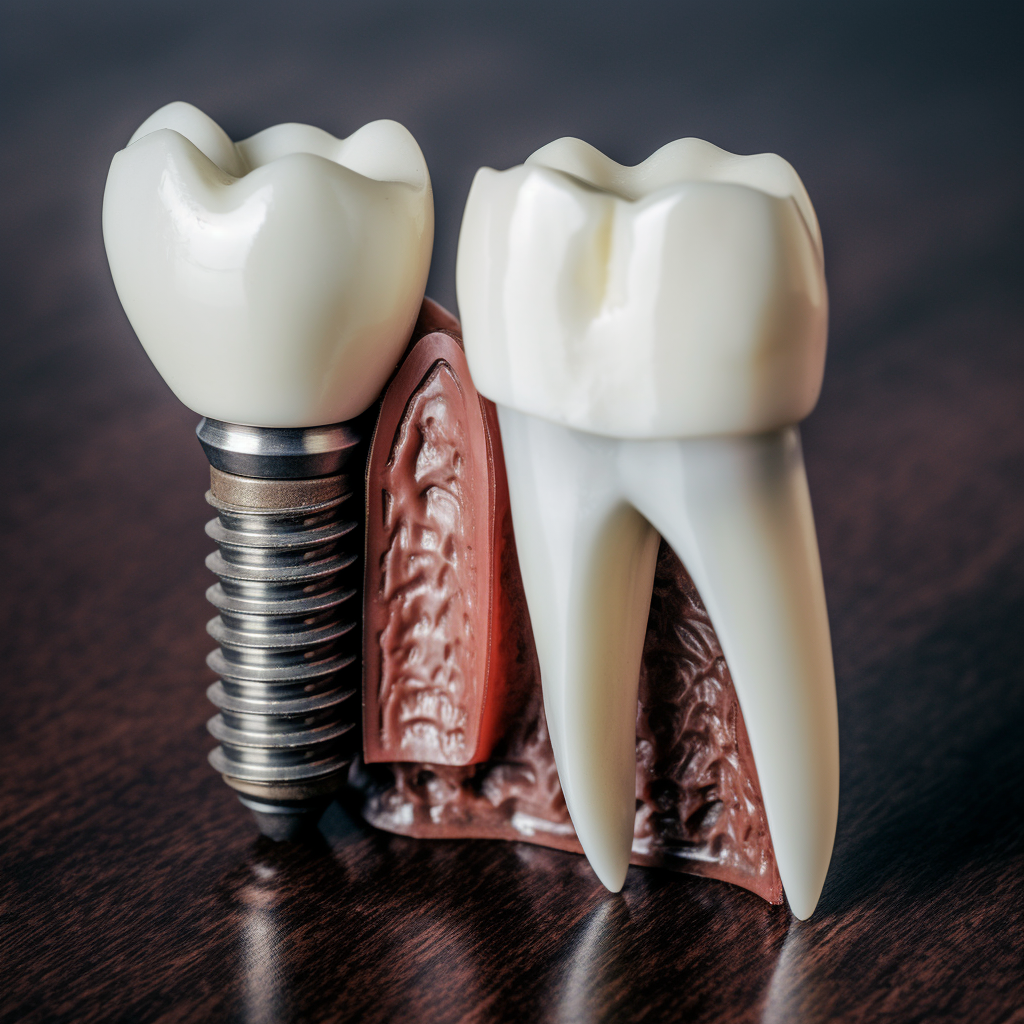
Following the bone grafting and once the jawbone is strong enough, the dental implant surgery can take place. During this operation, the dental surgeon makes a cut to open the gum and expose the bone. Holes are drilled into the bone where the dental implant metal post will be placed. Since the post will serve as the tooth root, it’s implanted deep into the bone. At this point, there will still be a gap where the tooth is missing. A type of partial, temporary denture can be placed for appearance, if necessary. The process of osseointegration then begins, which can take several months. Osseointegration is the process where the jawbone unites with the implant, providing a solid base for the new artificial tooth, just as roots do for natural teeth.
Placement of the Abutment
Once osseointegration is complete, the abutment is placed. The abutment is a post that connects the implant to the artificial tooth. To place the abutment, the oral surgeon reopens the gum to expose the dental implant, attaches the abutment to the dental implant, and then closes the gum tissue around, but not over, the abutment. In some cases, the abutment is attached to the dental implant metal post when the post is implanted. In this case, the abutment can be seen when the gums heal. However, because the abutment juts past the gumline, it is visible when the mouth is open, and this might not be a desirable outcome for some patients.
Attachment of the Crown
The final step in the dental implant process is the placement of the artificial tooth. Once the gums have healed, more impressions of the mouth and remaining teeth are made. These are used to create the crown, which is then attached to the abutment. Depending on the patient’s preference and the advice of the dentist, the crown could be removable, fixed, or a combination of both.
Dental implant surgery has a high success rate, but as with any surgery, complications can occur. These can include infection at the implant site, nerve damage that could cause pain or numbness in natural teeth, gums, lips or chin, sinus problems when dental implants placed in the upper jaw protrude into one of the sinus cavities, and implant failure, which can occur if the bone fails to fuse sufficiently to the metal implant.
In the case of implant failure or other complications, the dentist will discuss alternative options, which may include repeating the implant procedure or considering different tooth replacement options.
Maintenance of Dental Implants
The final aspect of the dental implant process is the maintenance of the implants. Dental implants require the same care as real teeth, including brushing, flossing, rinsing with an antibacterial mouthwash, and regular dental check-ups. While implants do not decay, the gum tissues around them can become inflamed or infected in the absence of good oral hygiene.
With proper care, dental implants can last a lifetime, making them a popular choice for people seeking a durable and permanent solution to tooth loss. They can provide improved appearance and self-esteem, the ability to eat foods without restriction, and better oral health overall.
In conclusion, dental implant surgery is a complex procedure that involves multiple steps over several months. From the initial consultation and examination to the post-procedure check-ups and ongoing maintenance, each step is crucial in ensuring the success and longevity of the dental implants. While the process can be lengthy and requires a commitment to good oral hygiene, the benefits of dental implants can far outweigh the challenges for those seeking a permanent solution to tooth loss.



Comments
adamgordon
It’s a great pleasure reading your post!
cmsmasters
Happy to be of service.
annabrown
Thanks for sharing this information is useful for us.
cmsmasters
Always happy to be of service.
miaqueen
This is awesome!!!
cmsmasters
Thanks.